

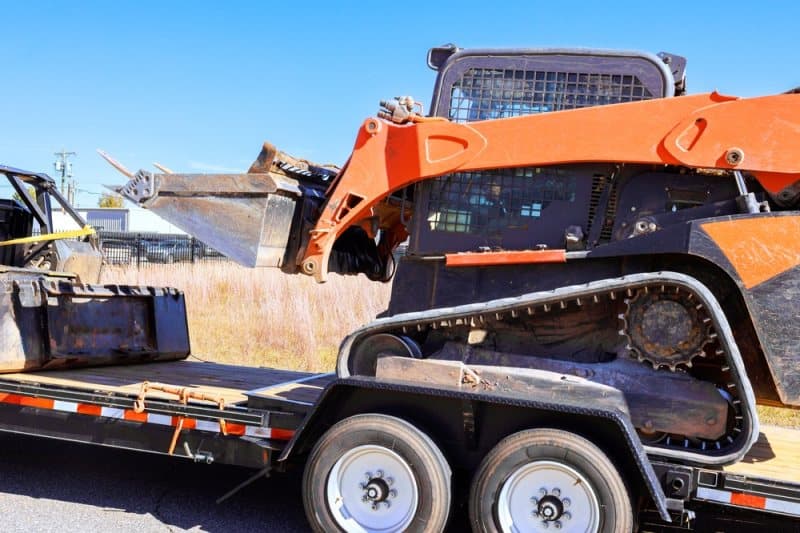
Most business owners operate under a massive financial delusion. They blindly assume their standard commercial property policy protects their physical assets everywhere. That assumption gets crushed the moment a transport truck crashes or a thief completely strips an active job site. Standard policies strictly lock your coverage to a static physical address. The second your expensive gear leaves the driveway, it becomes fully exposed to loss. You cannot rely on basic paperwork to shield mobile assets. You must lock down an inland marine insurance policy. This specialised contract specifically engineers a financial firewall around goods in transit, expensive tools, and off-site machinery.
Must Read: Actual Cash Value vs Replacement Cost: What Changes?
Standard property insurance instantly drops your coverage the second a delivery truck pulls out of your parking lot. Inland marine insurance plugs that massive hole. They named it centuries ago for river barges, but today it is the only physical contract keeping you from bankruptcy when a thief strips your job site or a transit van crashes on the highway with your expensive gear in the back.
You cannot operate a mobile business without understanding inland marine insurance explained at a baseline level. If your operations require moving inventory in trucks, storing gear at temporary job sites, or holding client property, this policy acts as a mandatory financial barricade against devastating theft, collisions, and natural disasters.
Top Pick: What Is Indemnity Insurance? Cost, Coverage, and Benefits
Relying on basic business paperwork leaves your mobile operations entirely defenceless against destruction. You must understand exactly how this policy acts as a highly specialised financial weapon.
The contract explicitly covers raw inventory and finished goods while they sit inside moving delivery trucks, completely protecting the balance sheet against catastrophic highway collisions.
If you legally hold property belonging to a client—like high-end art or sensitive electronics—this coverage absorbs the massive liability if that property gets destroyed inside your facility.
Standard policies abandon you at the physical property line. This contract follows your assets, forcing coverage over expensive materials dumped at an unsecured, temporary construction site.
Insurance carriers do not just hand over cash for broken tools out of pure corporate charity. You must identify the rigid structural features built directly into this specific legal contract.
Premium policies automatically execute on an all-risk basis, meaning the carrier must explicitly prove a specific exclusion to deny the claim, rather than allowing you to blindly prove the peril.
The coverage floats with the asset. It completely ignores static geographic boundaries, maintaining a relentless financial perimeter around the gear regardless of the exact GPS coordinates.
You must reject "actual cash value" payouts that factor in heavy depreciation. Demand strict "replacement cost" metrics to force the carrier to buy you brand-new equipment after a total loss.
Mixing up these two contracts will completely bankrupt a mobile operation the moment disaster strikes. You must dissect the physical limitations of inland marine vs commercial property insurance.
| Feature | Commercial Property Insurance | Inland Marine Insurance |
| Coverage Boundary | Restricted to a static, physical address listed explicitly on the contract. | Floats, providing a relentless financial shield regardless of geographic movement. |
| Primary Targets | Office buildings, massive warehouses, and permanent desktop computers. | High-value transit goods, mobile excavators, and temporary job site materials. |
| Transit Protection | Absolutely zero coverage. The second the asset hits the highway, you are exposed. | Engineered specifically to cover catastrophic crashes and cargo theft during active transport. |
| Exclusions | Heavily excludes any business property stored off-site for extended operational periods. | Thrives off-site, demanding coverage for goods left sitting at unsecured construction zones. |
Thieves actively hunt unsecured construction zones specifically to steal untraceable gear and ruin balance sheets. Deploying coverage for tools and equipment is a mandatory defensive protocol.
For high-volume hand tools, force the carrier to issue a blanket coverage limit. This prevents you from wasting hours manually tracking every single hammer and drill on a spreadsheet.
For high-dollar machinery, you must list each item with its exact serial number. The carrier will demand this rigid proof to execute a maximum payout.
Do not set a deductible higher than the value of your average tool. You must mathematically balance the premium against your actual ability to absorb small, targeted thefts out of pocket.
Operating a business outside of a locked, concrete building demands highly specialised financial defence. You cannot gamble your physical assets by relying on static commercial policies that instantly terminate coverage at the property line. Thieves, highway collisions, and weather systems will actively harm your gear the moment it hits the road. You must deploy a highly specialised inland marine insurance policy to force the carrier to assume the transit and job site risks.
No. It protects the cargo and tools sitting in the back of the truck. If the actual physical truck cab and engine are hampered, you must rely on a separate commercial auto policy to replace the vehicle itself.
Absolutely not. This contract acts solely to replace the physical asset. To survive the financial drain of a halted project, you must lock down a separate business interruption policy to cover your payroll and missed deadlines.
No. Inland marine strictly governs land-based transport and localised river systems. The second your massive cargo container is loaded onto an international freighter, you must switch to an ocean marine insurance contract to maintain continuous coverage.
Carriers will fight this claim unless explicitly stated in the contract. You must attach an "unattended vehicle" endorsement, which legally allows them to pay if the employee's car was locked with visible signs of forced entry.
It completely rejects digital reconstruction costs. While the policy will pay to replace the physical plastic laptop, you must use strong cyber liability insurance to cover the massive cost of recovering the damaged digital database.
This content was created by AI